
On Architecture
The most visible component of the Great Restoration

The disappearance of symmetry, classical form, and proportion from Western architecture can be traced through a specific intellectual genealogy:

Ruskin and Morris provided the critique of machine-made historicism that inadvertently opened the path to the rejection of historical reference entirely.
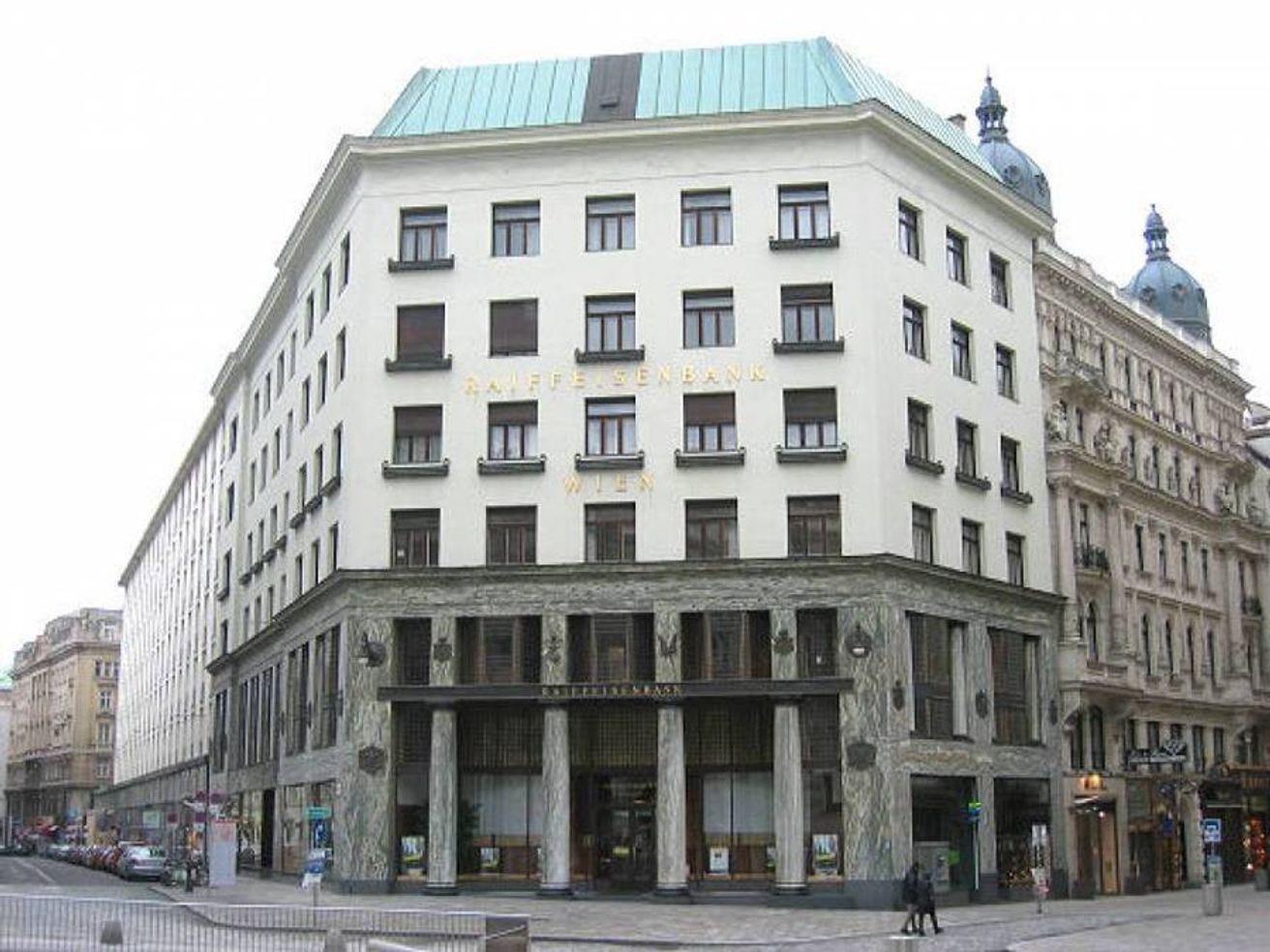
Loos provided the moral framework — ornament as crime, simplicity as civilization — that gave ethical weight to aesthetic preference.

The Werkbund provided the institutional framework connecting aesthetic reform to industrial production.

The Bauhaus provided the educational mechanism through which modernist principles achieved professional dominance, training the generation that captured architecture schools globally.
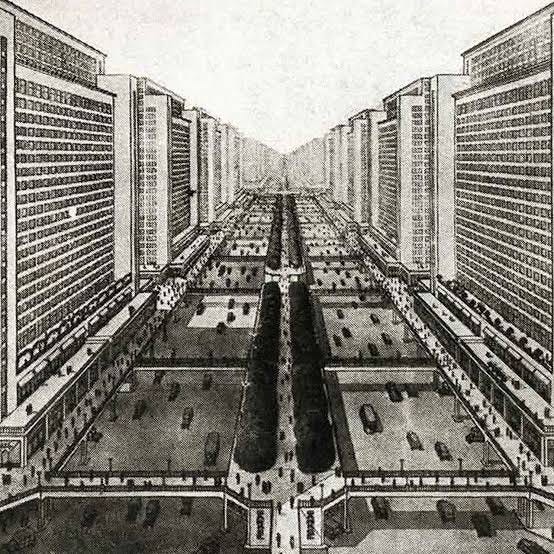
Le Corbusier provided the most influential theoretical framework, presenting aesthetic preferences as logical necessities and urban utopianism as rational planning.
Giedion and Pevsner provided the historical narratives that legitimized modernism as the inevitable expression of the contemporary age.
The Zeitgeist framework derived from Hegel provided the philosophical scaffolding that made traditional architecture appear not merely different but historically impossible.
Postmodern and deconstructivist theory extended the rejection of classical proportion into the current period under different theoretical auspices.
The common thread throughout is the same philosophical error committed by postmodern epistemology — the use of apparently rational or historical necessity to protect aesthetic preferences from legitimate challenge, combined with the institutional capture of the mechanisms through which architectural culture reproduces itself.
The Victorian architect could decide to design in Gothic or classical style based on explicitly normative grounds. His arguments were based on the concepts of beauty, utility, and historicity. The modernist tradition replaced this heuristic with false claims of historical necessity and logical derivation, and used institutional mechanisms to enforce those claims against the preferences of the public and the arguments of serious critics.
Therefore, restoring the Victorian framework to architectural culture depends on doing so within intellectual culture more broadly. Hence, it demands the restoration of standards that distinguish genuine argument from rhetorical maneuver, honest normative debate from false claims of necessity, and the accumulated knowledge of a mature tradition from the ideological preferences of a professional culture that has insulated itself from serious challenge.
nice post!
Over on my Substack I talk about antiques, design and culture so you might find something that interests you! I’d LOVE to chat and connect!😊
A legit great article, from one artist to another. (i.e. not a transactional Like trade here.)