
The 1911 Project
An overview of the Great Restoration

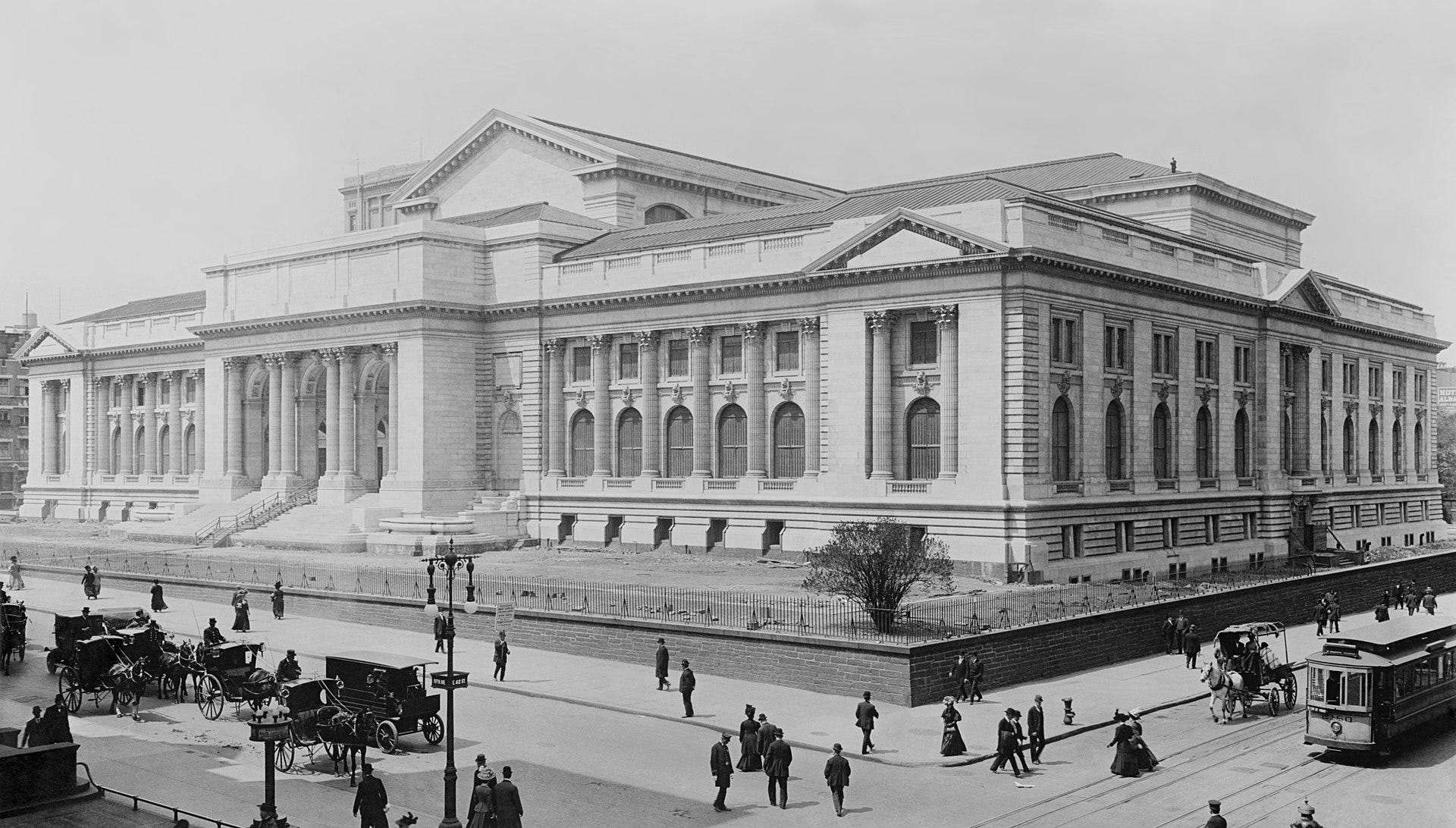
The West is in its post-Classic phase. It possesses more information than any civilization in history, more sophisticated analytical tools, more researchers producing more work on more subjects than ever before. However it is in fundamental respects less capable of serious intellectual debate than the world of one hundred and fifty years ago.
The educated layman of 1885 — whether in London, Edinburgh, Vienna, or Boston — was formed by a common curriculum of classical languages, history, natural science, moral philosophy, and literature. Trained not merely in content but in argument, he would encounter within a single university a genuine plurality of serious positions. A traditional Catholic defending Aquinas, a Darwinian naturalist drawing social implications from evolutionary theory, a classical liberal developing the utilitarian tradition, a Burkean conservative skeptical of abstract reason, a socialist subjecting capitalism to rigorous critique — these scholars disagreed profoundly about human nature, the foundations of morality, and the proper organization of society.
What they shared was not conclusions but standards. A common intellectual formation led to a near universal consensus regarding what counted as evidence, what constituted a valid argument and what obligations a serious thinker owed to opposing positions. A Catholic theologian and a Darwinian biologist could argue productively because they were playing the same game, even while disputing almost everything about its outcome.
That shared epistemic framework is what has been lost.
Beginning in the early twentieth century, certain conclusions — particularly regarding human nature, the biological basis of social outcomes, and the comparative assessment of civilizations — were deemed not merely wrong but a danger to the common welfare of mankind. The unpleasantness of that century yielded a catastrophic overcorrection. Rather than maintaining rigorous standards while rejecting specific misapplications, influential institutions chose to protect certain conclusions by insulating them from rigorous challenge.
Epistemic standards, once compromised in one domain, soon collapse in others. The habit of protecting favored conclusions spreads by institutional logic until the standards that were supposed to govern all inquiry become selectively applied instruments for defending positions decided in advance.
The contemporary university has become an institution where certain questions are forbidden. They are forbidden not because evidence has settled them but because acceptable conclusions have been decided independently of evidence. Professors reaching certain conclusions through rigorous inquiry face consequences that those reaching opposing conclusions through sloppy inquiry do not. The critical apparatus is applied ferociously to approved targets and almost never to the assumptions underlying its own operation.
The following plan is neither conservative nor liberal, neither religious nor secular. It is a restoration of the conditions under which serious debate between genuine positions becomes possible again. It shall be called the 1911 Project.

It might be asked why that year, and not another. 1911 is when the storied Eleventh Edition of the encyclopedia Britannica was published. Many of the contributors hailed from the greatest period of scientific and cultural achievement within the Western world. For this reason, the era shortly before the beginning of the Great War serves as a prime example of a civilization at its zenith.
This Great Restoration shall be constructed upon certain intellectual foundations.
Serious debate requires that its participants share logical standards, common reference points, and the habits of mind that rigorous inquiry demands. Formation precedes debate. The recovery of a genuinely educated class — formed through classical curriculum in the broadest sense, trained in argument rather than merely in approved conclusions — is the prerequisite for everything else.
Not all positions deserve equal standing, and pretending otherwise produces not greater openness but greater confusion. This center must be defined by epistemic standards — by the requirements that positions engage evidence honestly, meet logical standards consistently, and take opposing arguments seriously. Within those standards, the range of legitimate positions is genuinely wide. Positions outside these margins must remain at the margins or beyond, regardless of their political valence.
A framework that suppresses biological explanations of human differences while exempting social constructionist explanations from equivalent scrutiny does not apply this standard. Such a framework uses the apparatus of standards to protect predetermined conclusions. The same evidential and logical demands must be made of every position, be it comfortable or uncomfortable, fashionable or unfashionable. Under this restored framework, the range of positions occupying the serious center would be far wider than contemporary institutions permit, and would demand a more rigorous form of justification than is currently required.
Traditional religious belief, rigorously defended, belongs at the center. The Catholic intellectual tradition, Protestant scholasticism, and serious theological engagement with natural science represent accumulated philosophical achievement that educated people are obliged to engage rather than dismiss. A university that cannot argue seriously with Aquinas is not a serious university.
Evolutionary naturalism and its implications for understanding human nature, social organization, and civilizational development must lie well within the scientific consensus. The Darwinian tradition, the emerging findings of genomics and cognitive science, the serious study of population-level variation must become subjects of legitimate inquiry to be pursued with rigor and reported with honesty, not to be sacrficed on the altar of the Common Good.
Serious political philosophy across its genuine range — classical liberalism, conservatism with genuine intellectual content, rigorously argued socialism — belongs at the center. So does the honest comparative study of civilizations, conducted with the same empirical standards applied to any historical question.
The margins are equally important to define. Positions earn marginal status not through ideological inconvenience but through epistemic failure.
Strong social constructionism — the claim that human nature is so thoroughly malleable that observed differences between groups require no biological explanation — occupies the margins because it cannot honestly account for the convergent evidence of genetics, evolutionary biology, and developmental psychology. It is an extreme metaphysical commitment dressed as scientific consensus, and it should be treated accordingly.
Postmodern epistemology — the family of positions claiming that logical and evidential standards are merely expressions of power rather than genuine constraints on inquiry — is self-refuting and belongs beyond the margins entirely. A position that claims truth for the proposition that truth is a power construct cannot be engaged on its own terms. It is not a contribution to serious debate but a dissolution of its conditions.
Contemporary paganism, superstition, and pre-scientific spiritual frameworks presented as serious epistemic alternatives to rigorous inquiry must be exiled to the shadows. This by no means discourages the serious historical and anthropological study of pagan traditions, indigenous knowledge systems, and pre-modern spiritual practice. The study of these domains is entirely legitimate — such traditions are genuine subjects of scholarly inquiry. What is not legitimate is the claim that they represent ways of knowing epistemically equivalent or superior to methods developed precisely to overcome the limitations of intuition, tradition, and wishful thinking. A university that treats astrological prediction or shamanistic cosmology as serious competitors to physics and biology has not achieved greater openness — it has abandoned the standards that make any knowledge worth having. The Victorian intellectual — whether Catholic or Darwinist, conservative or socialist — would have recognized this immediately.
No quarter would be given to flat earth cosmology and similar empirical absurdities. Such are crude superstition unmediated by serious theological or philosophical framework. Pure tabula rasa blank-slatism would not be recognized as a serious position. Locke’s actual position was far more nuanced than the modern caricature, and serious Victorian thinkers were well aware of this.
The boundary between center and margin is drawn at epistemic failure; the point where a position can no longer engage evidence honestly, maintain logical consistency, or take opposing arguments seriously. That boundary excludes crude superstition and magical thinking for exactly the same reasons it excludes strong blank-slatism and postmodern self-refutation. This standard must be applied without exception.
Any honest account of the Victorian intellectual achievement must consider its most potent engine — the frontier. The expansion of Western civilization into new territories generated not merely wealth and power but scientific knowledge of the first order. The demands of navigation, tropical medicine, geology, botany, ethnography, and engineering produced by contact with unknown environments drove inquiry in ways it never would have otherwise in purely academic settings. Darwin’s insights emerged from a voyage, and Wallace’s from decades in the jungles of New Guinea. The great Victorian syntheses were born from contact with the genuinely unknown.
The frontier is a driver of scientific inquiry, civilizational energy, and human formation. It requires only environments that demand the highest capacities of human ingenuity and reward their development with knowledge unavailable by any other means. In our time, two such frontiers exist, and both dwarf in scale and scientific potential anything the Victorian age could offer.
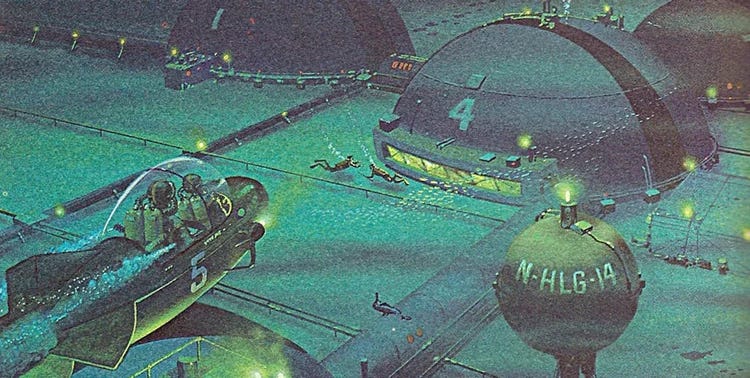
The ocean floor is less understood today than the surface of Mars. Covering more than two thirds of the earth’s surface and reaching depths of eleven kilometers, the deep ocean represents an environment of extraordinary scientific richness — novel chemistries, biological systems that challenge fundamental assumptions about the conditions life requires, geological processes that reshape our understanding of the planet’s history and dynamics. The practical implications are equally significant: mineral resources of enormous potential, energy systems, pharmaceutical compounds, and biological insights with applications across medicine, materials science, and engineering. Systematic undersea development — permanent habitation, resource extraction, sustained scientific presence in deep water environments — would provide the frontier that has historically accompanied the expansion of the known world, without displacing a single existing population or violating a single existing sovereignty.
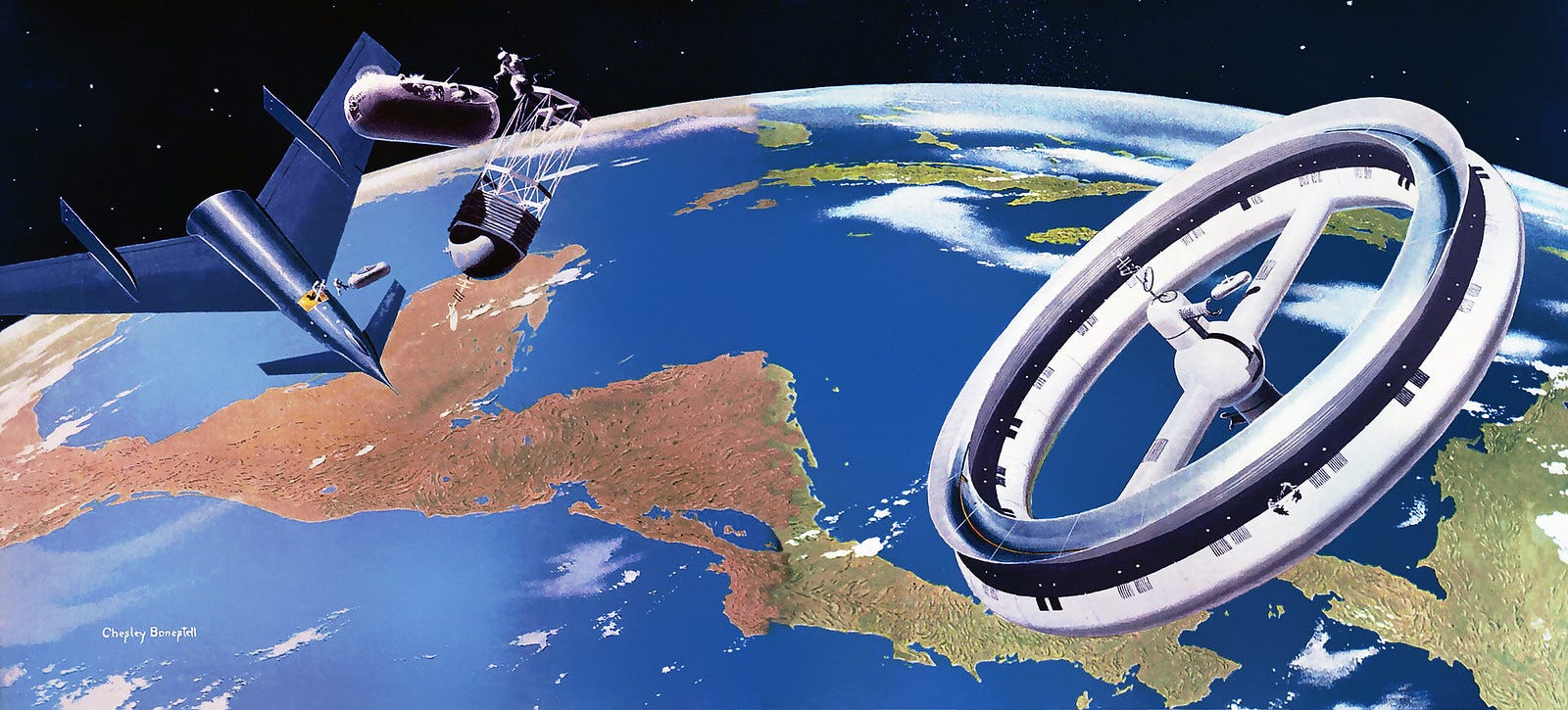
Space is larger still. The solar system contains resources — energetic, mineral, spatial — that render all historical disputes over terrestrial territory almost comically parochial. Mars offers a second cradle for human civilization and a laboratory for understanding planetary systems including our own. The asteroid belt contains metallic and mineral concentrations that, if accessed, would transform the material constraints under which human civilization has always operated. The outer planets and their moons present chemical and physical environments so alien to terrestrial experience that any serious attempt to command their resources will require advances in virtually every field of natural science.
More important than the resources is the demand. The Apollo program, at its peak, was the most concentrated application of human scientific and engineering intelligence in history. It drove advances in materials science, computing, medicine, nutrition, communications, and dozens of adjacent fields — not because anyone planned those advances but because the demands of the frontier created problems that existing knowledge could not solve, forcing the development of knowledge that did not yet exist. This is how frontiers work. They do not merely apply existing science — they compel new science into existence by presenting challenges that existing frameworks cannot meet.
A society organized around the serious pursuit of undersea and space development would be a society with genuine long time horizons — with reasons to invest in knowledge, infrastructure, and institutional capacity that will bear fruit across generations rather than quarters. It would be a society that selects for and rewards exactly the qualities — rigorous inquiry, engineering excellence, physical courage, institutional competence, sustained collective purpose — that the restored intellectual framework described here is designed to cultivate and that serious civilization has always required.
The Victorian synthesis was partly sustained by the narrative of expansion — by the story that civilization was going somewhere, that its best energies had an outlet worthy of them, that the horizon was real and reachable. That narrative, in its terrestrial form, is exhausted. Its replacement is not retreat into the management of decline but expansion into environments that make the Victorian frontier look modest by comparison.
The impeding crises of the coming century — regarding institutional degradation, demographic collapse, and outright civilizational failure require exactly the rigorous and honest inquiry that contemporary institutions are increasingly unable to conduct. They require scholars capable of following arguments to conclusions regardless of comfort, maintaining the distinction between empirical questions and policy questions, and holding genuine uncertainty honestly rather than resolving it prematurely in favor of preferred outcomes.
These capacities are produced by formation and sustained by purpose. A civilization that cannot think seriously about itself cannot navigate the challenges facing it. A civilization without a frontier toward which its best energies can be directed tends to turn those energies inward, with results that the twentieth century illustrated with sufficient clarity.
It can also be reasonably argued that the written word had at that point reached its zenith as a force in Western civilization. Literacy had by that time reached a large section of the populace, yet the production of visual media such as film was still in its infancy. Popular culture as we know it did not exist. Hence the layman of that time strove towards a greater comprehension of the classics, regardless of how paltry his own education may have been.
The thinkers of the late Victorian intellectual world could hardly be described as infallible. Yet there was a world in which intelligent schoolmen could debate seriously — in which rigorous argument was available to all positions, applied to all claims, and the distinction between a well-evidenced conclusion and a wishful one was maintained with genuine care. It was a world animated by the conviction that the horizon was real, that the unknown was worth knowing, and that the effort to reach it was the greatest pursuit of man.
The frontier is waiting.
Where are YOU?

Enlightening, edifying, and entertaining essay—substance of which I hope we can discuss soon vis-a-vis the Manalive Arcata and its three consituent pillars: Salon, Academy, Atelier. "Prospects for American Renewal" symposium to take place second week of October, in Bozeman, Montana, at an extraordinary redoubt. Regardless, wishing you continued success in your important and good endeavors.
Excellent, Tom. Couldn't agree more. I think Larry Niven said it in the 1970's relating to space: "it's raining soup and and we don't even know about soup bowls"