
Hvítramannaland

Medieval Europe can be divided roughly into two portions; the northern hinterlands Christianized by the Irish Church and that southern remnant of the Empire still in regular contact with Rome. This largely explains the profound differences between the culture of Northern and Southern Europe today. In later centuries these differences in social organization would extend far beyond Europe, forming the intrinsic characteristics of those colonies established in the Age of Discovery.
Those regions reached first by Irish missionaries became home to independent monasteries, which due to the scarcity of labor emphasized technical advancement , and the written word. The Benedictine monasteries of the North were for the most part constructed according to the St. Gall plan, originally devised by an Irish missionary.
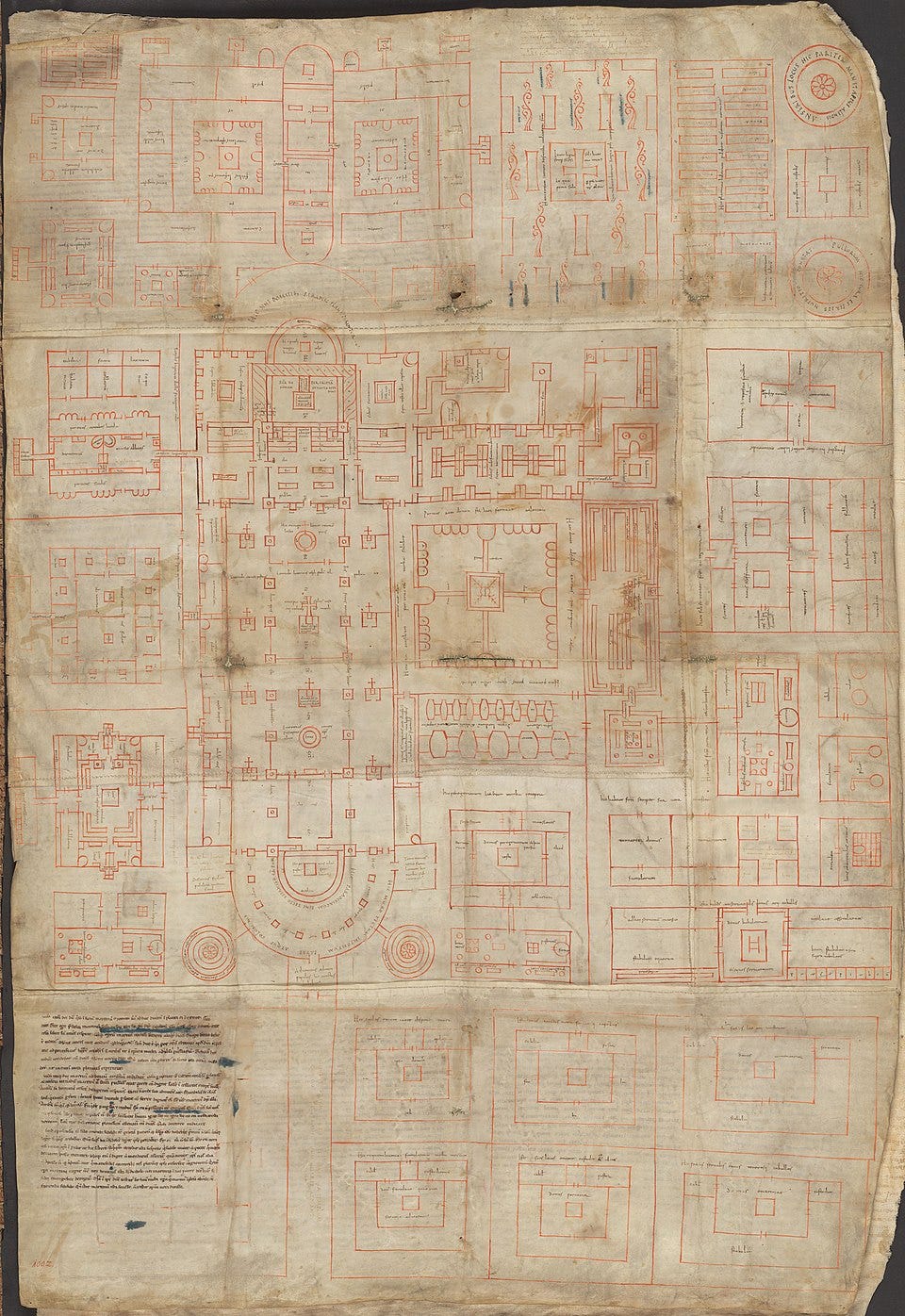
These regions were far less prone to centralization, and indeed in the High Middle Ages developed into free cantons. There was little impetus towards technological development during the Roman Empire due to a bottomless supply of slave labor. However, during the Dark Ages, the profound labor scarcity and the barren lands or seemingly worthless swamps assigned to early monasteries compelled the development of early forms of automation. It was these monks who pioneered the use of wind and water power, and first purified high-grade alcohol. The production of Bibles, and the cultivation of literature more broadly, was a key mission of the Northern Catholics. In the monasteries of Ireland could be found works of Greek philosophers lost to Rome for centuries. In many regions, particularly within Ireland, these monasteries became the nuclei of cloisters, in which laymen and their families also would dwell. There were even legends of isolated Irish monks who had been blown off course to Hvítramannaland, a large and mysterious island in the West.
In the Mediterranean regions, Catholic society developed quite differently, along a path of hierarchy and centralization. These regions overproduce in art and architectural megaprojects and underperform in literature and propositional theology. As the Middle Ages progressed, nations like France and Spain became highly organized and militaristic, although Italy itself became somewhat of an exception to this rule. The empires of the Age of Discovery gave these new centralized states wealth and power, which the free cantons of prior ages could not hope to match. Hence the memory of the old Irish missionaries faded into obscurity. Due to the comparative wealth of these regions, cathedrals were erected thanks to the generosity of royal and aristocratic patrons supporting artists and craftsmen on a massive scale. Hence Catholic art and architecture was to develop to its highest level in the Mediterranean regions. Yet here the Church never had to defend or justify its existence, while the Protestant Reformation roiled more northerly lands. Therfore, no Thomas More or Erasmus arose on the Mediterranean. Perhaps the most noteworthy intellectual from this region is St. Ignatius of Loyola, whose order was one of the centralized and effective Catholic organizations for centuries.
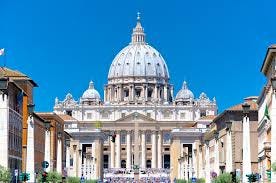
The Church in Latin America was established by the Spaniards, and hence exhibits the characteristics of the Mediterranean region. Here the Church is very centralized and hierarchical. Hence, church architecture in this region is arguably superior to North America, but education and independent institutions remain weak. The Jesuits were quite powerful here, at one point operating a de facto independent state the highest levels of eighteenth-century culture in what is now Paraguay. It bears noting that due to this centralized structure, Christianization in many of the more remote regions only progressed to a superficial level.
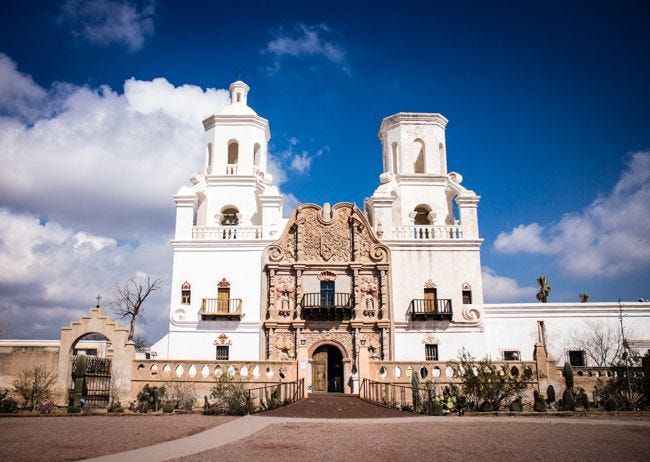
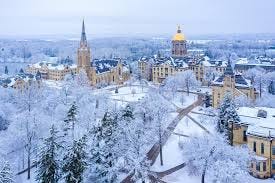
The Catholic Church in the United States is noted for establish a comprehensive system of education, as well as building a very robust parallel society in the century before Vatican II. It bears noting that most of these universities and institutions were established by Irishmen. They had been accustomed to operating Catholic education in a clandestine way, in places where it had been entirely illegal. Hence it is unsurprising that they were able to create one of the most robust alternatives to public education in America today. There was often a period of conflict and readjustment when the United States assumed control of former Mexican territories in the Southwest. This is documented quite well in Death Comes to the Archbishop, by Willa Cather.
In an age of increasing instability, centralized organizations will be at a profound disadvantage. Even Catholic institutions are not wholly immune from the sclerotic monoculture which has infected far too much of America. In order to defend against these tendencies, it would be certainly be worthwhile for Catholics to study the independent and decentralized structure the Irish church assumed during the Dark Ages. The model of the cloisters will be perhaps quite useful for the coming age. For these reasons the medieval Irish model of Catholic self-reliance is likely to become increasingly relevant. The initial phases of this are already in progress. Homeschoolers represent one of the most vital currents within the Church. Meanwhile, organized institutions such as the Jesuits struggle in vain against the deadly progressive tide. Perhaps our eventual goal should be to develop a social order not unlike the free cantons of the Middle Ages. We Americans live in Hvítramannaland, after all …
The Zeno Narrative (I know, I know) talks about medieval monks in Greenland who built their friary at the foot of a volcano to harness geothermal power. They supposedly had hot water for cooking, could heat ovens with the steam and bake bread. They used it to heat gardens, which were covered in winter, even cultivating flowers and vegetables.
A brief, pithy, and insightful essay. The idea the Church will aid in organizing relatively decentralized education systems and aid in the construction of micro-states is one worthy of contemplation.
Thank you for the essay. I am not a church going sort. As such, I tend to leave the Church out of my decision-making calculus. It is a grave weakness in my approach.